Many parents wonder: Is DNA testing safe for my newborn baby?
Whether you need to establish paternity, confirm a biological relationship for legal reasons, or screen for genetic conditions, the thought of any procedure on a tiny infant can be worrying.
The good news is that modern DNA testing for newborns is simple, painless, and carries no known health risks. The most common method – a cheek swab – takes only seconds and does not involve needles, blood draws, or any invasive procedure.
This article explains how newborn DNA testing works, why it is safe, when it may be necessary, and what parents should know before proceeding.
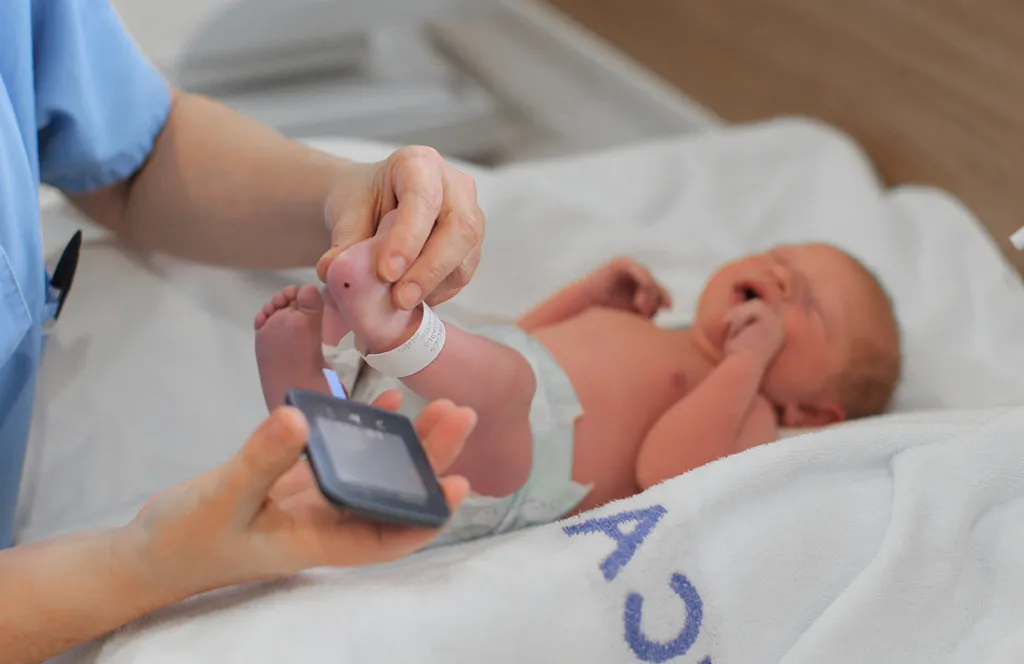
How Is DNA Collected from a Newborn?
There are three main ways to collect DNA from a newborn. Each has a different safety profile.
1. Buccal (Cheek) Swab – The Most Common & Safest Method
A buccal swab is a soft, cotton-tipped applicator similar to a long Q-tip. The collector gently rubs the inside of the baby’s cheek for about 10–15 seconds to collect cells containing DNA.
Why it is safe for newborns:
- No needles or sharp instruments
- No pain (babies may fuss from the sensation, not from pain)
- No bleeding or tissue damage
- No risk of infection
- Can be done while the baby is sleeping or feeding
The swab is then placed into a sterile tube and sent to a laboratory for analysis. This method is recommended by the American Academy of Pediatrics for non-invasive DNA collection in infants.
2. Blood Draw (Heel Prick or Venipuncture) – Rarely Used
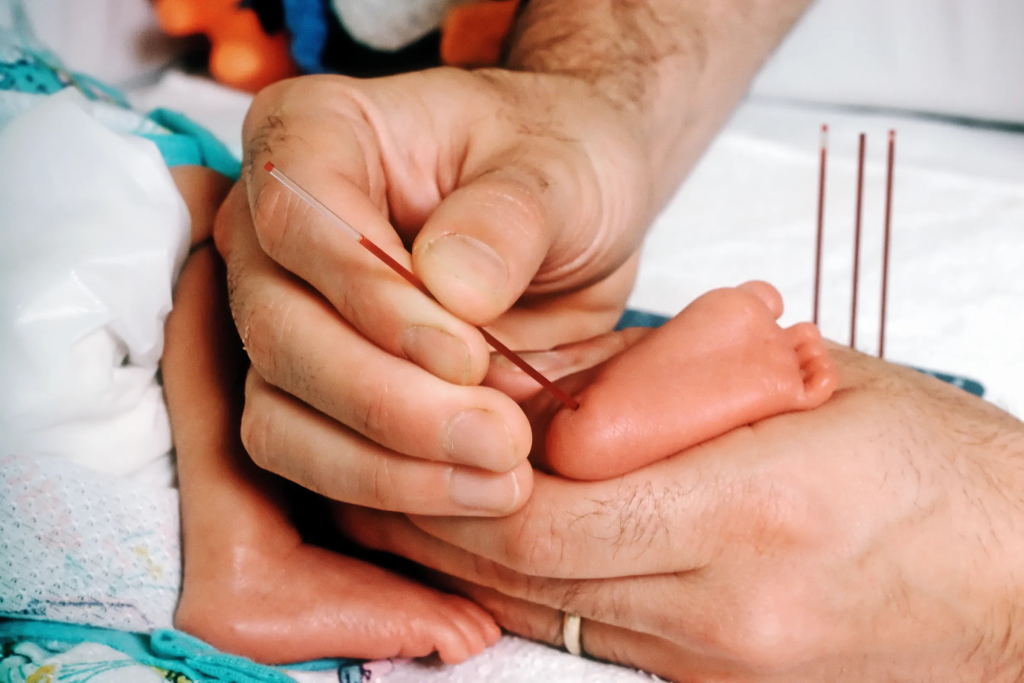
In some cases – such as certain genetic health tests or when a cheek swab fails to collect enough DNA – a small blood sample may be needed. This is typically done via a heel prick (similar to routine newborn screening) or, less commonly, a vein draw.
Safety considerations:
- Heel prick causes momentary discomfort but is very low risk
- Used routinely for state-mandated newborn metabolic screening
- Slight risk of bruising or minor bleeding – resolves quickly
For standard paternity or relationship testing, a blood draw is almost never necessary. Cheek swabs provide sufficient DNA.
3. Umbilical Cord Blood – Only at Birth
Immediately after delivery, a small amount of blood can be collected from the umbilical cord. This is completely painless and non-invasive to the baby. However, it requires advance planning and is only available during birth.
Is Cheek Swab DNA Testing Safe for Newborns?
Yes – it is extremely safe. Extensive clinical experience and multiple studies confirm that buccal swab collection has zero known adverse effects in newborns.
Here is why medical professionals consider it safe:
✅ No Pain Receptors in the Cheek Surface
The inner cheek lining (buccal mucosa) heals very quickly and has few pain nerve endings in the superficial layer. Babies may feel mild pressure or tickling, but not sharp pain.
✅ No Bleeding or Tissue Damage
A proper cheek swab is gentle. It only collects loose epithelial cells that naturally shed. It does not cut or scrape deep enough to cause bleeding.
✅ No Infection Risk
The swab is sterile and single-use. Unlike a needle stick, there is no break in the skin barrier, so bacteria cannot enter the bloodstream.
✅ No Sedation Required
Because the procedure is non-painful, babies do not need any medication, numbing cream, or sedation. They can remain awake, feeding, or even sleeping.
✅ Performed by Trained Professionals
In accredited DNA testing centers, sample collectors are trained specifically in infant swabbing technique. They know how to gently open the baby’s mouth and avoid triggering the gag reflex.
Bottom line: A cheek swab DNA test is as safe as putting a pacifier in your baby’s mouth.
Common Fears Parents Have – And Why They Are Unfounded
Fear #1: “Will the swab choke my baby?”
No. The swab is only rubbed on the inside of the cheek, not inserted down the throat. It never goes past the gums. The collector keeps the swab away from the airway.
Fear #2: “Will it hurt or traumatize my baby?”
No. Most babies do not even wake up if they are sleeping. Some may briefly turn their head or make a mild fuss – similar to having their mouth wiped with a cloth. There is no lasting distress.
Fear #3: “Is there any radiation or chemical exposure?”
No. DNA testing involves no radiation, no dyes, and no chemicals applied to the baby. The swab is dry. The analysis happens in a lab, not on the baby.
Fear #4: “Could the test be wrong and cause family problems?”
Accuracy is a separate issue from safety. When performed by an AABB-accredited lab, newborn paternity tests are over 99.9% accurate. False results are extremely rare. However, parents should be emotionally prepared for any outcome.
Part 4: When Might a Newborn Need DNA Testing?
Newborn DNA testing is not routine. It is typically performed for specific reasons:
1. Legal Paternity Establishment
If a father’s name needs to be added to the birth certificate, or for child support proceedings, a legal DNA test may be ordered soon after birth. Courts accept cheek swab results from newborns.
2. Immigration (USCIS) Cases
For visa or green card applications where a biological relationship must be proven, USCIS accepts DNA testing of infants. The same cheek swab method is used.
3. Medical Genetic Screening (Newborn Screening)
Every baby born in the United States undergoes routine newborn screening via a heel prick blood spot. This screens for over 30 genetic and metabolic disorders (e.g., PKU, cystic fibrosis, sickle cell disease). This is not the same as paternity testing, but it also involves DNA analysis and is considered safe and essential.
4. Suspected Genetic Disorder
If a newborn has symptoms of a rare genetic disease, a doctor may order targeted DNA testing (often from a blood sample) to reach a diagnosis.
5. Private Parental Request (Peace of Mind)
Some parents simply want to confirm a biological relationship for personal reasons. Home paternity kits exist, but for legal validity, an accredited center should perform the test.
Safety Comparison – Newborn DNA Test vs. Routine Newborn Procedures
To put safety in perspective, here is how a cheek swab DNA test compares to other common newborn procedures:
| Procedure | Pain Level | Invasiveness | Risk |
|---|---|---|---|
| Cheek swab DNA test | None | Minimal (surface cells) | Zero |
| Heel prick (newborn screening) | Mild | Tiny puncture | Extremely low (minor bleeding) |
| Vitamin K injection | Mild to moderate | Needle stick | Extremely low |
| Circumcision (male) | Moderate to high | Surgical | Low (bleeding, infection rare) |
| Vaccination | Mild to moderate | Needle stick | Very low |
As shown, a cheek swab is less invasive than a heel prick – which is already considered a routine, safe procedure performed on millions of newborns each year.
How to Ensure a Safe & Accurate Newborn DNA Test
Follow these guidelines for a safe experience:
✅ Choose an AABB-Accredited Laboratory
For legal or immigration purposes, always use a laboratory accredited by AABB. These labs follow strict chain-of-custody and quality standards. You can find one through our directory:
👉 Find an AABB-accredited DNA testing center near you – dnacentersusa.com
✅ Do Not Use At-Home Kits for Legal Matters
At-home kits are safe for collection (parents swab the baby themselves), but the results are not admissible in court. For legal paternity, go to a professional center.
✅ Feed the Baby Before Collection
A calm, fed baby is easier to swab. A hungry or crying baby may move more, making the swab slightly more difficult – though still safe.
✅ Ask for an Experienced Collector
Most DNA centers have staff experienced with infants. If you feel uncomfortable, ask if they have collected from newborns before.
✅ Avoid Swabbing Immediately After Feeding
Wait about 10–15 minutes after feeding to allow milk to clear from the cheeks, which gives a better DNA sample. This is for accuracy, not safety.
No. The swab is soft and gentle. It does not damage the delicate lining of the cheek. You might see a tiny pink spot if the collector rubbed too hard, but this resolves within minutes.
No. Cheek swabs can be collected from newborns just hours after birth. The only requirement is that the baby is stable and healthy enough to have their mouth gently opened.
Yes, for personal knowledge only. Home kits use the same cheek swab method. However, for any legal or immigration purpose, you must go to an accredited center where a neutral witness collects the sample and verifies identities.
A very small number of cells – much less than what is collected. Labs can amplify DNA using PCR technology, so even a tiny sample works.
For medical genetic testing (ordered by a doctor), insurance may cover it. For legal paternity or immigration testing, insurance typically does not cover it. Expect to pay
Frequently Asked Questions
| Question | Answer |
|---|---|
| Is cheek swab DNA testing safe for newborns? | Yes – completely safe, painless, non-invasive |
| Does it hurt? | No. Babies may briefly fuss but feel no pain. |
| Are there any risks? | No known risks. No needles, bleeding, or infection. |
| Can it be done at home? | Yes for personal use; for legal matters, use an accredited center. |
| When should I test my newborn? | For paternity, immigration, or medical reasons; not routinely needed. |
| Where can I find a safe, accredited center? | dnacentersusa.com |
If you need a legal DNA test for your newborn – whether for paternity establishment, child support, or immigration – do not worry about safety. The cheek swab method has been used safely on millions of infants worldwide. Focus instead on choosing an AABB-accredited laboratory to ensure your results are accepted by courts and government agencies.